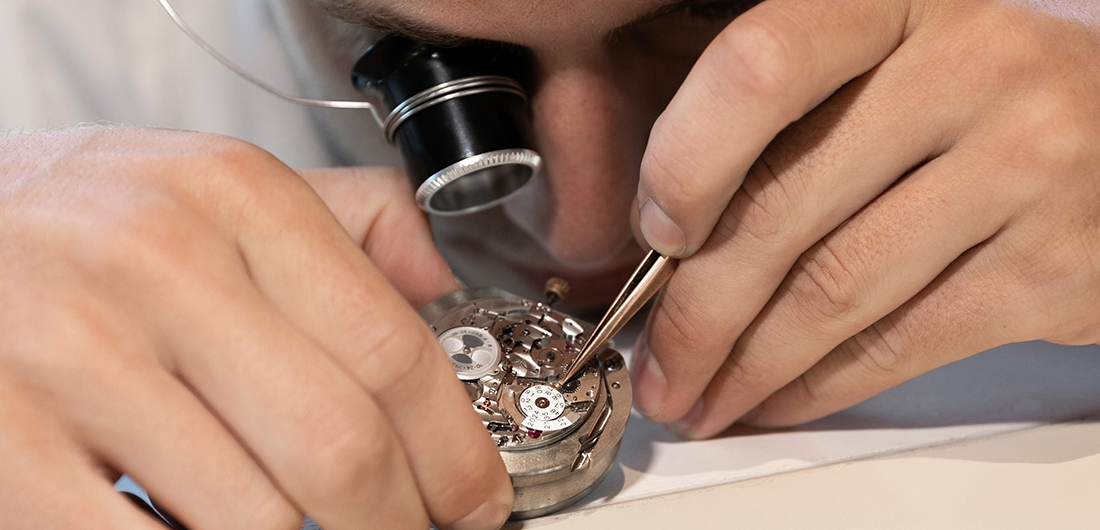
A session with IWC Schaffhausen reveals why, when it comes to mechanical watchmaking, the smallest details demand the greatest skill.
There is something rather different about admiring a beautifully made mechanical watch and being handed a screwdriver and invited to take one apart.
That was the prospect facing Chris recently when Berry’s Jewellers invited him to join an IWC Watchmaking Masterclass at Dakota Newcastle. The event formed part of a UK roadshow taking in Berry’s stores in Newcastle, York, Leeds and Nottingham.
He’d been actually been invited to a similar IWC event a number of years ago but, frustratingly, couldn’t make it. So when the opportunity came around again, he wasn’t going to miss it twice.
Here, Chris shares his experience of stepping into the watchmaker’s shoes and discovering the extraordinary precision, patience and skill behind every mechanical movement.
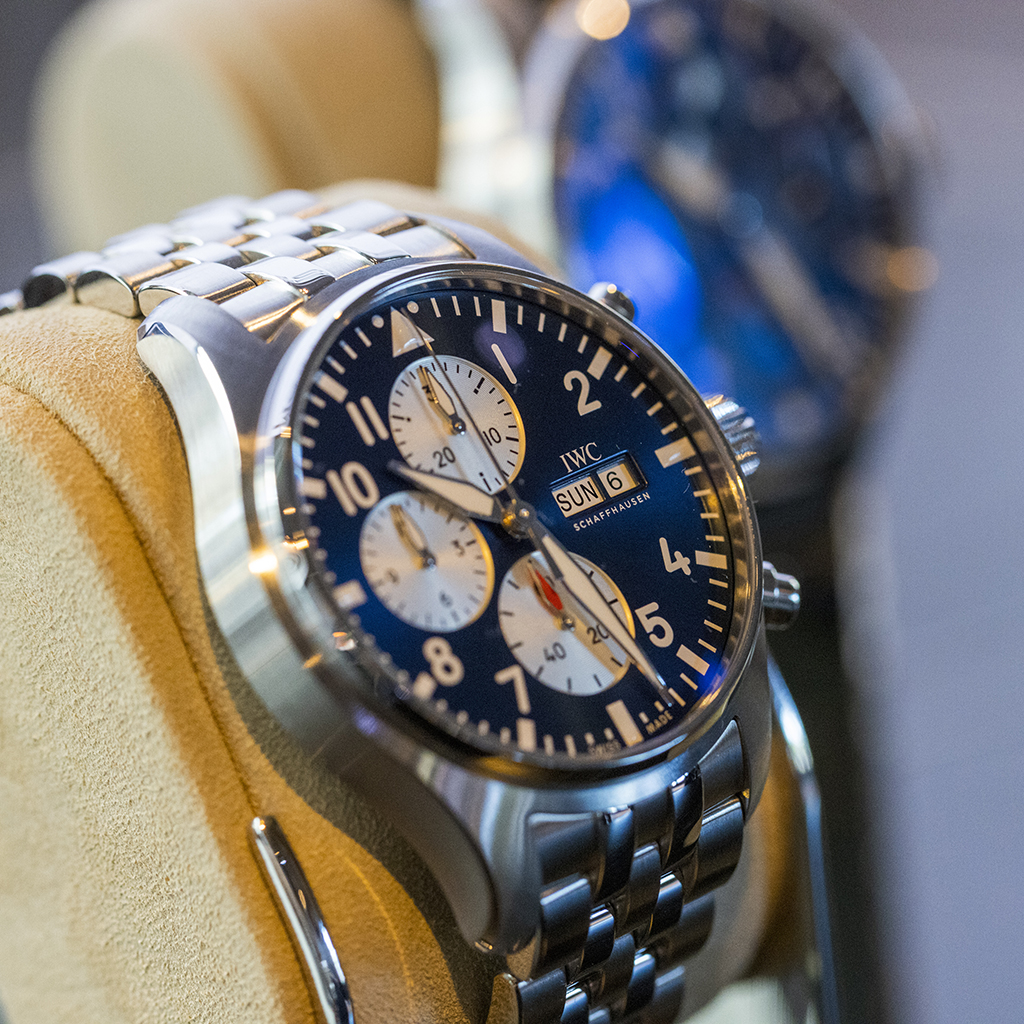
A masterclass in mechanical watchmaking
I wasn’t alone. I was one of just eight Berry’s customers invited to take part in the Newcastle masterclass. It began mid-morning in one of Dakota’s private event spaces.
Representing IWC Schaffhausen was watchmaker Sabrina Herzog. IWC is proud to have a strong contingent of female watchmakers, including Sabrina at its headquarters.
There was an infectious passion for the mechanics of watchmaking, combined with an endearing Swiss precision and a wonderfully dry German sense of humour.
Both, as it turned out, would be required.
Because sitting in front of each of us was a mechanical movement we were expected to dismantle and then, somehow, put back together again.
The history behind IWC Schaffhausen
Our hand-wound movement had its roots in the historic Jones calibre, providing a direct connection to the origins of IWC itself.
The story begins in 1868 with a 27-year-old American watchmaker and engineer called Florentine Ariosto Jones.
Having worked for the E. Howard Watch & Clock Company in Boston, Jones travelled to Switzerland with an ambitious idea. He wanted to combine modern American manufacturing methods with the skills and craftsmanship of Swiss watchmakers.
Rather than establishing himself in Switzerland’s traditional watchmaking heartlands, Jones chose Schaffhausen in the north-east of the country.
There, he founded the International Watch Company. In doing so, he laid the foundations for a distinctive combination of precision engineering and traditional Swiss watchmaking. More than 150 years later, that philosophy remains central to IWC.
It’s a lovely piece of history. But contemplating the achievements of Florentine Jones is considerably easier than attempting to dismantle one of his descendants.
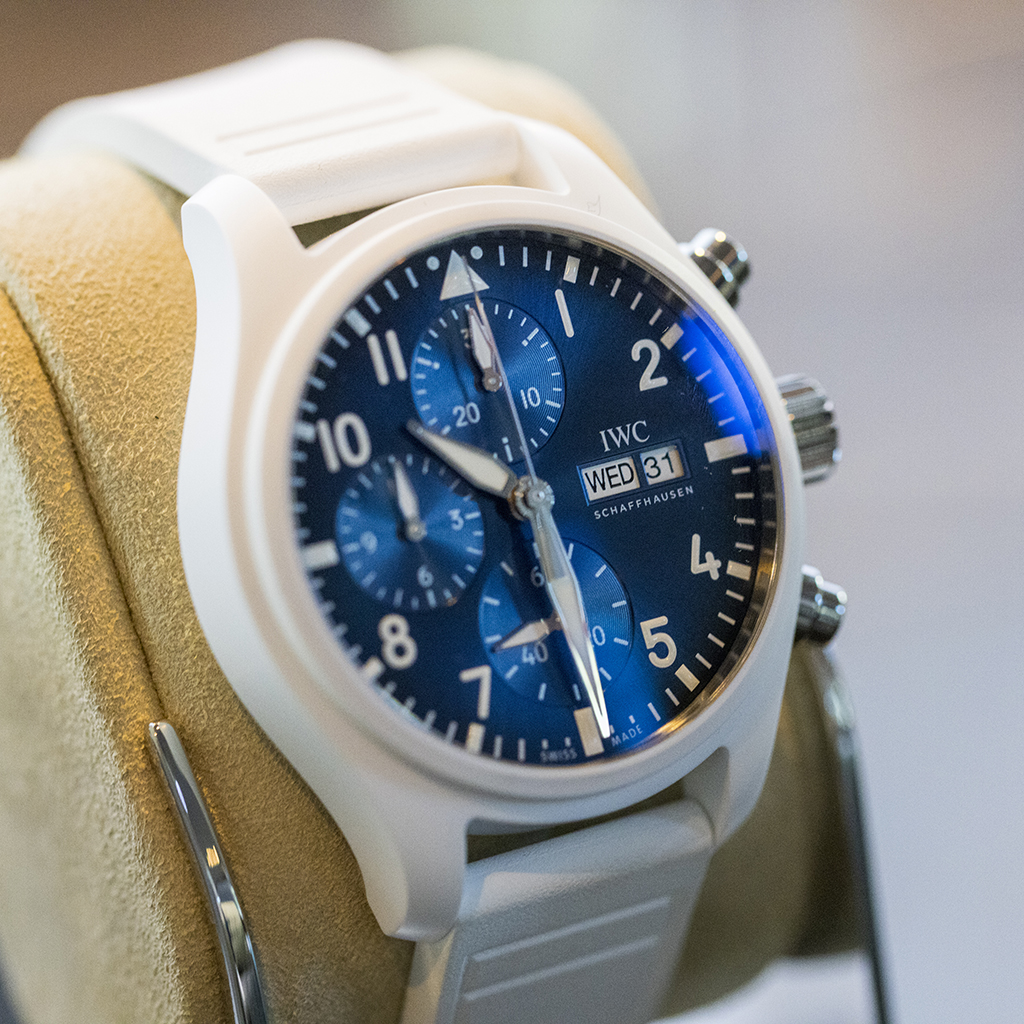
The challenge of the smallest details
Under Sabrina’s watchful eye, we began dismantling the movement. We carefully removed bridges, wheels and screws, placing each component into the sections of the small parts tray in front of us.
And when I say screws, I mean tiny screws. Some were barely 1.0 mm long.
Trying to pick up a piece of steel that size with tweezers is difficult enough. Holding it securely, positioning it in precisely the right place and then introducing a screwdriver is considerably harder than Sabrina made it look.
Every so often, there would be the unmistakable ping of another component making a bid for freedom. This was followed by several grown adults staring hopefully at the Dakota shag pile.
I somehow managed to find two wayward screws belonging to my fellow participants. Whether that demonstrates an emerging talent for watchmaking or simply very good eyesight, I’m not sure.
Watching Sabrina at work only heightened the contrast. In her hands, tweezers, screwdrivers and components seemed to operate in perfect harmony. What she could position in a second could take the rest of us considerably longer.
There is something wonderfully humbling about watching an expert perform a task with apparent ease. Attempt exactly the same thing yourself moments later, however, and you discover your fingers suddenly have all the delicacy of a pair of sausages.
Gradually, though, our movements came together.
Taking them apart, of course, was only half the challenge.
We then had to put them back together.
A new appreciation for mechanical watches
And this is where the experience really starts to change your appreciation of a mechanical watch.
Each wheel, bridge, screw and component has a precise purpose and position. Things don’t simply drop into place.
Tiny pivots need to be located perfectly, screws need to be handled with extraordinary care and everything has to work in harmony.
There is no battery or microprocessor quietly compensating in the background. Instead, energy is stored mechanically in the mainspring. It then travels through a sequence of beautifully engineered components to regulate the passing of time.
And it all happens in a space small enough to sit comfortably on your wrist.
Eventually, the collection of components in front of us began to resemble a watch movement again. Sabrina circulated the room, providing expert intervention whenever our newfound confidence exceeded our actual ability.
Then comes the moment you’re waiting for.
It moves.
Having started the morning with a functioning mechanism, we had dismantled it into a slightly terrifying collection of minuscule parts. After successfully reassembling it, seeing the movement come back to life was surprisingly satisfying.
Admittedly, none of us was likely to receive a job offer from Schaffhausen on the strength of our morning’s work. But that wasn’t really the point.
The experience gives you a completely different appreciation of what sits behind a mechanical watch.
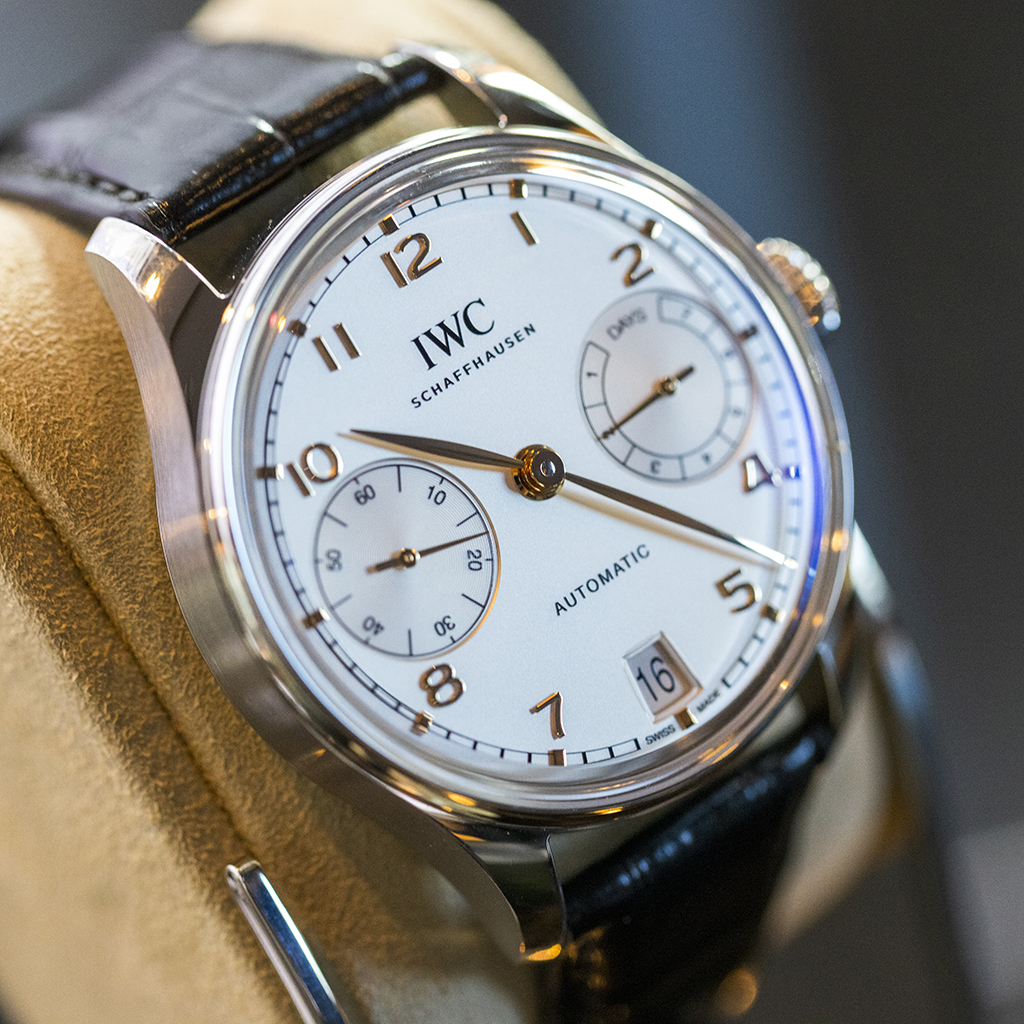
The human skill behind fine watchmaking
We tend to talk about luxury watches in terms of design, precious metals, complications, heritage and, inevitably, value.
What is much harder to appreciate until you sit at a watchmaker’s bench is the human skill involved.
The patience. The training. The dexterity. The understanding of how hundreds of tiny mechanical interactions ultimately translate into something as simple as the movement of a hand around a dial.
More than 150 years after Florentine Ariosto Jones arrived in Schaffhausen, his philosophy remains remarkably tangible. His ambition to combine engineering with Swiss craftsmanship continues to shape the world of IWC.
Thankfully, Berry’s and IWC didn’t leave us hunched over our workbenches for the entire day.
With our movements successfully rebuilt, and hopefully all the screws accounted for, the masterclass concluded with a fine lunch in Dakota’s restaurant.
It was a suitably civilised ending to a fascinating morning.
My own contribution to the world of fine watchmaking may have lasted only a few hours. But I dismantled an IWC movement, put it back together and, perhaps most importantly, it was still working when I left.
I’ll take that.