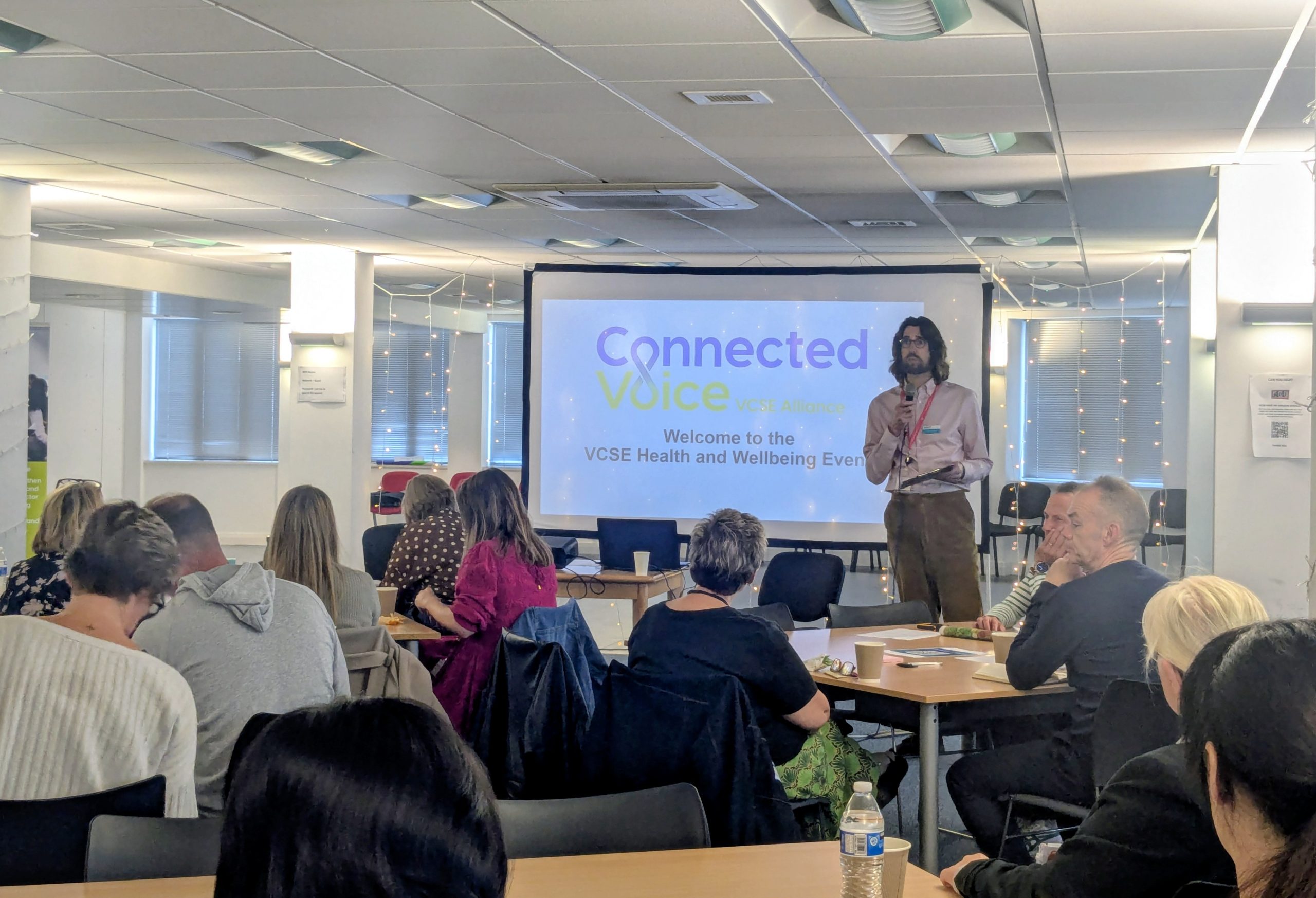
Connected Voice Chief Executive Lisa Goodwin shares why supporting the people behind local charities matters more than ever…
Name
Lisa Goodwin
Charity name
Connected Voice
Your role in the charity
Chief Executive
Tell us about the charity and its mission…
Connected Voice supports voluntary and community organisations across Newcastle and Gateshead. Our mission is to help these organisations continue their important work, reducing inequality and enriching lives across our communities.
What drew you to this particular cause?
It was a happy accident! After university, I wanted to work at Arts Council England but didn’t get the job. Instead, I joined a charity called Voluntary Arts, now known as Creative Lives.
I helped small community arts charities with everything from policies to funding applications, and I absolutely loved it. I’ve worked for organisations that support other charities ever since.
What inspired you to get involved in charity work?
I find the work so varied and rewarding. Connected Voice is a membership organisation with over 900 member charities and community groups. We get to see the best of society in action every week, and we get to play a part in making great things happen across our area.

A day in the life of working for your charity?
My role focuses on strategic leadership and representing the interests of our members.
That means making sure the voluntary and community sector has a voice in important decisions, including those involving NHS partners and local authorities. So, I attend a lot of meetings!
I also oversee the support we provide, ensuring it meets the needs of the charities and community organisations we work with.
Any recent, ongoing, or upcoming projects or campaigns we should know about?
We have a very special birthday coming up! Connected Voice will be 100 years old in 2029, so we’ve started thinking about how to celebrate.
We were instrumental in helping to establish many charities that are still thriving today, including the predecessors to Age UK, Legal Aid, Citizens Advice and Disability North, as well as Newcastle Volunteer Centre and Newcastle Carers.
We want to make sure we mark this special milestone and celebrate some of the brilliant things we’ve been involved in over the years.
What has been your proudest moment in your charity work?
Probably receiving an MBE for services to vulnerable people in 2021. This recognised the role Connected Voice played in supporting people during the Covid-19 lockdowns.
We had to change our focus overnight. Our amazing staff team was involved in everything from running fundraising campaigns and distributing money to frontline VCSE groups to managing a helpline for people who were isolating.
We also supported over 100 charities with changing their payroll processes so they could furlough their staff.
It was a steep learning curve, especially as I’d only been in my CEO role at Connected Voice for six months when lockdown happened. The board and staff team were brilliant at getting on with whatever was needed.
I still feel very proud to be the CEO of an organisation that ‘gets stuff done’.
What’s the biggest challenge charities face today?
There are a lot right now! Charities have been dealing with rising demand and increasing costs for many years.
They’re helping more people than ever, and many of our members say those seeking support are facing much greater levels of poverty and serious health challenges.
I think the biggest challenge right now is managing that increase in demand while costs continue to rise.
Most charities rely on public donations or funding applications, but people have less money in their pockets to give. At the same time, funders report being inundated with applications, meaning charities are less likely to be successful.

What’s the most important lesson charity work has taught you?
I think it’s that the people who shout the loudest are rarely the ones who need to be heard the most.
I have the privilege of meeting many ‘unsung heroes’ in my role. These are people who quietly get on with running their charity or community group and do brilliant things without needing recognition.
It’s taught me to seek out the quieter people and ask them questions. Their perspectives are so valuable in a representational role like mine.
If you could share one message about your charity’s mission with our readers, what would it be?
Volunteering doesn’t happen by accident, and it isn’t free.
There’s an army of amazing people involved in local charities across Newcastle and Gateshead, from trustee boards to Girlguide leaders, community football coaches and foodbank volunteers.
They’re able to do brilliant things because of the infrastructure working behind the scenes. This supports their charities with everything from setting up to finance and fundraising.
A charity might provide free services, but the cost of doing so is significant.
Charity CEOs are running businesses just like CEOs in the private sector, often with a much greater burden of reporting and performance monitoring. This is only right because charities rely on public funds, but I’d love there to be greater awareness of the work involved in managing charities behind the scenes.
How do you hope your involvement with this charity will inspire others to support or engage with the cause?
This one feels tricky to answer because of Connected Voice’s role as a VCSE membership organisation.
We have a lot of causes to support because we have so many members. Our work therefore focuses on what we can do to make things better for the voluntary and community sector as a whole.
That might be through our advice and training or the work we do to represent the sector and make sure its voice is heard.
I think my message to inspire people is that getting involved in the voluntary and community sector, whether as a volunteer, staff member or supporter, helps benefit the wider world. So don’t hesitate to do it!
What’s your vision for the future of the charity, and how do you see it evolving in the years to come?
As we approach our first century, I feel very confident that Connected Voice will still be around in another 100 years.
As a charity, we’ve always evolved with the times. Initially, we did a lot of work for ‘the poor’ in a more paternalistic way, as was the norm at the time.
We naturally became a hub for social action before reimagining ourselves as a membership organisation for the flourishing voluntary and community sector in the post-war period.
Social justice and tackling inequality have always been at the heart of what we do, but our methods have changed a lot over the years.
One thing I think will always be important is making connections, both between VCSE organisations themselves and between different sectors.
We’re part of the ‘glue’ that helps bind the VCSE sector together. We also help build those vital relationships that support good working partnerships between charities and the public sector.